108 N LBJ Dr, San Marcos, TX Mon-Fri: 7:00 AM - 9:00 PM · Sat-Sun: 7:00 AM - 6:00 PM
6+ Years in San Marcos · Licensed & Insured

Foundation Repair in San Marcos, TX Built for Balcones Clay and Limestone

San Marcos sits right on the Balcones Escarpment, and that's a problem for foundations. East of I-35, Blackland Prairie clay swells after a storm and shrinks into cracks wider than an inch during drought. To the west, homes often rest partly on limestone and partly on clay or fill. Add Flash Flood Alley rains and 100°F summers, and slabs settle, heave and crack on a cycle. San Marcos Foundation Repair Company figures out why your home is moving and fixes the cause, not just the symptom.

Our crews work on both sides of the fault line. We level 1920s pier-and-beam cottages near Belvin Street and Dunbar, pier 1970s slabs in east San Marcos, and fix drainage on newer post-tensioned slabs in Kyle and Buda. We also handle hillside homes in Wimberley. Landlords with student rentals get the same careful evaluation as long-time homeowners. Every inspection includes elevation readings, photos and a clear written report before any repair starts.

  • Serving San Marcos and Hays County since 2020
  • Bonded
  • Fully insured

Homeowners, landlords and home buyers across Hays and Caldwell counties call us when they want a clear explanation backed by elevation readings and photos, not a sales pitch.

Request Your Free Estimate

No obligation. Fast, honest quotes.

Your information is never shared.

Online Estimates
Onsite Service
Licensed & Insured
Customer Rated
Local Expertise

Why San Marcos Homes Need a Foundation Specialist

Most cities have one main kind of soil. San Marcos has two, and the Balcones Fault Zone runs between them. Add record droughts, flash floods and a fast-changing housing stock, and you have one of the hardest places in Texas to keep a foundation level.

Expansive Clay, Karst Limestone and Flash Flood Alley

East of I-35, the Houston Black, Branyon and Heiden clays are some of the most expansive soils in Texas. They swell when wet. When they dry, they shrink and open cracks that can run several feet deep. West of the escarpment, soils are thin and full of caliche over karst limestone, and the depth to bedrock can change within a few yards. The weather swings between extremes. Annual rainfall averages in the mid-30-inch range, but it comes in bursts like the Memorial Day and Halloween floods of 2015, with multi-year droughts in between, such as 2011 and 2022–2024. That's why slab perimeters drop in August, centers dome after wet springs, and cracks open and close with the seasons.

A Housing Stock Spanning a Century

Central San Marcos still has pre-1950s bungalows and Victorians on cedar or concrete-block piers, many with worn shims and rotted sills. Ranch homes from the 1950s through the 1980s sit on conventional slabs, often with cast-iron sewer lines underneath. Newer subdivisions like Blanco Vista, Kissing Tree and Hills of Hays use post-tensioned slabs. Many of them were built quickly on clay or on cut-and-fill lots. Manufactured homes on blocks are common around Maxwell and Uhland, and Wimberley has stone homes on stepped hillside foundations. Each needs a different repair.

Permits, Historic Districts, Floodplains and HOAs

Texas doesn't license foundation contractors, so documentation counts for a lot. The City of San Marcos generally requires a building permit for structural foundation work, and Kyle, Buda, New Braunfels, Lockhart and Wimberley each have their own building departments. In the Belvin Street, Burleson Street, Hopkins Street and San Antonio Street historic districts, raising a house or changing its skirting may need a Certificate of Appropriateness. Floodplain rules apply along the San Marcos and Blanco rivers and Purgatory Creek. HOAs in Plum Creek, Sunfield and Veramendi may limit drainage changes and contractor access.

A Fast-Growing Market Driven by Inspections

Hays County is one of the fastest-growing counties in the country. San Marcos had about 67,500 residents in 2020, and Kyle had about 45,700. Homes in the Austin–San Antonio corridor sell fast, so inspection findings often come with tight repair deadlines, and buyers want proof that the work was done. Texas State's 38,000+ students also mean a large stock of rentals where owners need repairs that are honest and fit the budget.

Know The Signs

Common Foundation Problems in San Marcos and Hays County

Most foundation trouble here comes from a few repeat causes: clay that won't hold still, rock that isn't level, water that shows up all at once, and plumbing under the slab. Here's what we find most often, how to spot it and how serious each one is.

Drought-Driven Perimeter Settlement

Serious

When clay under the outer edge of a slab dries and shrinks, the perimeter beam loses support and drops. The center stays higher, so the house sags at its corners and edges.

Why it happens here

East San Marcos, Martindale and much of Kyle sit on Blackland Prairie clay that loses a lot of volume as it dries. In summers like 2011, 2022 and 2023, with weeks over 100°F, shrinkage cracks open deep beside foundations. Edwards Aquifer watering restrictions limit how much homeowners can soak the soil. Live oaks, pecans and cedar elms pull out even more moisture. Shallow repairs or skipped drainage fixes often let the settlement come back.

Signs to watch for
  • Stair-step cracks in brick veneer, usually near corners
  • Gaps between frieze boards and brick
  • Exterior doors that won't latch by late summer
  • Soil pulled away from the slab edge
  • Sloping floors toward an outside wall
  • Windows that bind or show diagonal drywall cracks at their corners
Local patterns

We see this most in 1960s–1980s brick ranch homes in east San Marcos, older Kyle neighborhoods and Lockhart. It's worst on lots with large live oaks near the slab, and it usually shows up from July through October after long dry spells.

Our fix

Pressed concrete or steel piers driven to load-bearing strata along the settled beam, plus drainage correction and, where trees are the cause, root barriers.

Wet-Season Heave and Slab Doming

Moderate

After heavy rain or a plumbing leak, clay under the middle of the slab soaks up water and swells. The center rises while the edges stay put, so the slab ends up domed.

Why it happens here

Flash Flood Alley storms can dump several inches of rain on cracked clay in one day. The water runs down the cracks and swells the soil fast. Heave is easy to misread as settlement, and lifting the 'low' edges of a slab that's actually heaving makes things worse. That's why we take elevation readings across the whole slab before recommending anything.

Signs to watch for
  • Interior doors sticking at the top after wet weeks
  • Cracked tile or a hump in the middle of the house
  • Drywall cracks that open after rain and close in summer
  • Cabinets pulling away from walls
  • Baseboards separating from the floor
Local patterns

Common after wet springs and fall storms in Blanco Vista, Hometown Kyle and east-side neighborhoods on Houston Black clay. Homes with poor gutter discharge or flat lots get it worst.

Our fix

Moisture management first: drainage, gutters and leak testing. Then we take readings over time. We only add piers or level the slab once we know which way it's actually moving.

Pier-and-Beam Deterioration

Moderate

In older raised homes, cedar or block piers sink or tilt, wood shims crush, and sills and beams rot. Floors get soft, sloped and bouncy.

Why it happens here

Many pre-1950s homes in central San Marcos still sit on their original piers. Poorly vented crawlspaces trap humidity, and the clay underneath moves the pier pads seasonally. Floodwater from the San Marcos River and local creeks has soaked many of these crawlspaces over the decades.

Signs to watch for
  • Bouncy or soft spots in the floor
  • Floors that slope or dip toward interior walls
  • Cracked plaster on interior walls
  • Musty crawlspace odor or standing water
  • Gaps under interior doors
  • Visible rot on the sills from outside
Local patterns

Concentrated around downtown San Marcos, Dunbar, the Belvin and Hopkins Street areas, and historic cores in Lockhart, Buda and Gruene. Many older student rentals near campus also have deferred crawlspace maintenance.

Our fix

New piers or pads, steel or hardwood shimming, sill and beam replacement, and better ventilation. We re-level gradually to protect old plaster and finishes.

Hill Country Cut-and-Fill Differential Settlement

Serious

On sloped lots, part of a foundation sits on cut limestone and part sits on fill or clay. The fill compresses and the rock doesn't, so the house bends.

Why it happens here

Lots west of the escarpment in Wimberley, Woodcreek, Driftwood and western New Braunfels are often graded flat by cutting into rock on one side and filling the other. Karst limestone can also hide voids, and bedrock depth changes over short distances. A repair designed for clay doesn't fit here.

Signs to watch for
  • Cracks in limestone or stone veneer that widen toward the downhill side
  • Retaining walls leaning or bulging
  • Diagonal cracks running from one side of the house
  • Gaps at decks or porches on the low side
  • Garage slab cracking across the width
Local patterns

Typical on newer hillside builds in Veramendi and around Woodcreek, and on stepped foundations in Wimberley. Downhill corners on fill usually move first, especially after heavy rain.

Our fix

Piers drilled or driven to competent rock under the fill side, plus slope drainage and retaining wall work, all designed around the site's actual bedrock depth.

Under-Slab Plumbing Leaks

Emergency

Broken sewer or supply lines under a slab soak the soil. The clay heaves or washes out, the slab moves, and the leak gets worse.

Why it happens here

Homes from the 1950s–1980s often have cast-iron or clay sewer lines that have reached the end of their life. Winter Storm Uri in February 2021 also caused widespread under-slab line failures. Leveling a slab can stress weak pipes, so testing before and after a repair is essential.

Signs to watch for
  • Water bill rising for no clear reason
  • Sound of running water with every fixture off
  • Warm spots or damp flooring
  • New cracks appearing quickly in one area
  • Slow drains or sewer odor
  • Mildew under carpet or cabinets
Local patterns

Most common in older slab homes in central and east San Marcos and in older Kyle neighborhoods. We've also seen more of them since 2021 across Hays County, including in rentals with a lot of turnover.

Our fix

Plumbing leak testing, then line repair by a licensed plumber. Once the soil has stabilized, we repair the slab or level it, then retest.

Flood Scour and Saturated-Soil Damage

Emergency

Fast floodwater washes soil out from under footings and piers. Days of standing water also soften the bearing soil, so the foundation can sink unevenly.

Why it happens here

The 1998 and 2015 floods hit homes along the Blanco River, San Marcos River, Cypress Creek and the Guadalupe. In the floodplain, substantial-improvement and elevation rules can apply after damage, so repairs have to account for permits, not just structure.

Signs to watch for
  • Exposed or undermined footings
  • Piers that are tilted or missing
  • Floors suddenly out of level after a flood
  • Mud or debris in the crawlspace
  • Separated porches or steps
Local patterns

Concentrated near the Blanco River in Wimberley, along Cypress Creek in Woodcreek, along Purgatory Creek and the San Marcos River in town, and in low-lying areas of Martindale and Gruene.

Our fix

Shoring right away, then new piers or re-supported footings, backfill and drainage, with any floodplain permits coordinated before the permanent work.

Early Slab Movement in New Subdivisions

Minor

Post-tensioned slabs in newer homes deflect slightly in the first few years. You'll see drywall cracks, garage slabs separating from the house and pooling water from tight grading.

Why it happens here

Kyle, Buda, San Marcos and New Braunfels were built out quickly on expansive clay. Lots are often graded with very little fall away from the house, and landscaping and beds tend to trap water against the slab.

Signs to watch for
  • Hairline drywall cracks above doors
  • Gap between the garage slab and house slab
  • Water pooling along the foundation after rain
  • Minor sticking doors
  • Cracked or lifted sidewalks near the house
Local patterns

Common in Plum Creek and Hometown Kyle, Sunfield and Garlic Creek in Buda, Blanco Vista, and Veramendi. These owners are often also dealing with builder warranties and HOA rules.

Our fix

Elevation documentation, drainage and grading correction within HOA rules, and monitoring. Piers only if readings show real ongoing movement.

What We Do

Foundation Repair Services in San Marcos, TX

We match the repair to the soil, the age of the house and how it's actually moving. You'll get a deep pier where one is needed and a drainage fix where that's enough. Here's every service we offer, grouped by the problem it solves.

Specialty

Slab Foundation Repair & House Foundation Repair

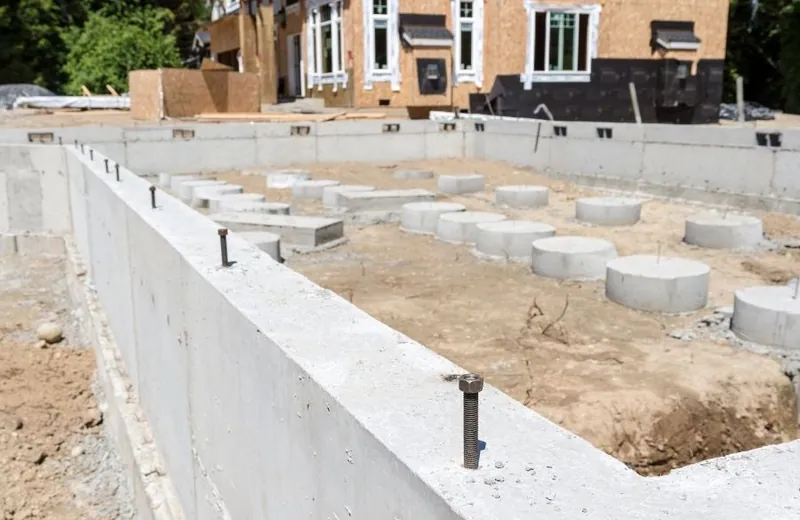
We stabilize settled slab-on-grade and post-tensioned foundations, including concrete and poured concrete foundations, and re-support the perimeter and interior beams so the house stops moving.

Our approach

We use pressed concrete or steel piles driven to load-bearing strata, and drilled bell-bottom piers in deep clay where needed. Every repair is based on elevation readings, with plumbing tested before and after.

In San Marcos, TX

On east-side Blackland clay, piers have to go below the zone of seasonal moisture change. On Hill Country lots, we load them to rock under the fill side. That's how we avoid the re-failures San Marcos homeowners have seen before.

Best for

Brick ranch homes with stair-step cracks, newer slabs with real measured movement, and homes going through a sale with structural inspection findings.

Specialty

Pier and Beam Foundation Repair, Crawl Space Repair & Stem Wall Repair

We re-level raised homes, replace failed concrete or cedar piers, repair stem walls and fix crawlspaces with rot, moisture or poor ventilation.

Our approach

We install new pier pads, steel or hardwood shims, and new sills and beams. We add vents or moisture control and raise the house gradually to protect plaster.

In San Marcos, TX

This is built for historic homes near Belvin Street, Dunbar and downtown San Marcos, plus Lockhart and Gruene, where skirting and raising the house may need historic-district approval. We also re-level and re-block manufactured homes around Maxwell and Uhland.

Best for

Bouncy, sloping floors, older rentals near campus, and historic homes that need a careful, rules-compliant re-level.

Foundation Raising, Concrete Foundation Leveling & Concrete Slab Leveling

We lift settled slabs and structures back toward level and restore support so doors, windows and floors work again.

Our approach

We lift gradually on piers while checking readings at each step. We level as far as the structure can safely tolerate, not to a perfect number that would crack finishes.

In San Marcos, TX

Domed slabs on Houston Black clay can't be leveled by lifting their edges, so we confirm heave versus settlement first. Raising a structure in a floodplain may also bring elevation rules into play.

Best for

Homes with confirmed settlement, separated garage slabs and floodplain structures.

Foundation Crack Repair, Wall & Floor Crack Repair, Foundation Patching & Concrete Block Foundation Repair

We seal and structurally repair cracks in concrete foundation walls, floors, block foundations and stem walls. We also repair foundation walls and patch spalled concrete.

Our approach

We use epoxy or polyurethane injection, routing and sealing, block re-pointing and rebuilding, and patching mortars. First we figure out whether the crack is still active.

In San Marcos, TX

Seasonal clay movement makes cracks open and close here. We measure crack width over time so we don't just patch a crack that will reopen next August.

Best for

Hairline to moderate cracks, aging block foundations and cosmetic fixes after the foundation has been stabilized.

Foundation Drainage

We get water away from your foundation so the soil stays at a consistent moisture level year-round.

Our approach

We install French and surface drains, gutter downspout extensions, regrade around the house, and add root barriers where trees are pulling moisture from the soil.

In San Marcos, TX

Flat, tightly graded lots in Kyle and Buda and hillside runoff in Wimberley both need drainage fixes. We work within HOA rules in Plum Creek, Sunfield and Kissing Tree.

Best for

Wet-season heave, pooling water and any pier job where drainage caused the movement.

Concrete Slab Leak Repair

We deal with the foundation side of under-slab leaks: tracking the damage, repairing the slab and stabilizing the soil once a licensed plumber fixes the line.

Our approach

We test for leaks, coordinate the plumbing repair, open and restore the slab or tunnel underneath, backfill, and retest after any lifting.

In San Marcos, TX

Cast-iron sewer lines in 1950s–80s homes and plumbing that failed during Uri make this a frequent issue in central and east San Marcos.

Best for

Rising water bills, sudden localized cracks and pre-lift testing.

Foundation Inspection

We evaluate your foundation and give you a clear written report that explains what's moving and why.

Our approach

Each inspection includes elevation readings across the slab or floor, photos, crack mapping, and a review of drainage and trees.

In San Marcos, TX

It's useful for Texas State-area rentals, real estate deals in the Austin–San Antonio corridor and new-build owners documenting builder-warranty claims.

Best for

Buyers, sellers, landlords and anyone who wants facts before spending money.

Concrete Foundation Reinforcement & Concrete Foundation Sealing

We strengthen weakened beams and walls and seal exposed foundation concrete against moisture.

Our approach

We use added steel or concrete reinforcement, beam supplementation, crack injection and penetrating or membrane sealers.

In San Marcos, TX

It helps foundations that have been through flash floods, and older slabs whose edges have been exposed to wet-dry cycles for decades.

Best for

Older slabs, flood-exposed walls and preventive upkeep.

Garage, Driveway & Concrete Slab Repair

We repair and stabilize garage foundations, driveway slabs and other concrete flatwork that has settled or cracked.

Our approach

We lift, re-support, replace sections or patch them, depending on the damage and what's under it.

In San Marcos, TX

Garage slabs separating from the house are common on clay in Kyle, Buda and San Marcos subdivisions.

Best for

Garage separation, sunken driveways and trip-hazard slabs.

Foundations, Foundation Installation & Crawl Space Foundation Construction

We build new foundations and crawlspace foundations for additions, rebuilt structures and replacement foundations.

Our approach

We design around the soil on your site, with piers to rock or below the active clay zone, plus proper ventilation and drainage.

In San Marcos, TX

It's for additions on clay lots, replacing foundations under flood-damaged homes and hillside sites west of I-35.

Best for

Additions, rebuilds and homes whose original foundation can't be saved.

Commercial Foundation Repair

We stabilize foundations under small commercial buildings, multifamily properties and student housing.

Our approach

We do the same documented process at a larger scale and phase the work to keep tenants in place where possible.

In San Marcos, TX

It's for duplexes and apartments near Texas State and historic storefronts downtown.

Best for

Landlords, investors and small business owners.

Simple & Transparent

Our Foundation Repair Process

No guesswork and no surprises. Every job follows the same five steps, so you know what's being done, why, and what it costs before anyone picks up a shovel.

Inspection and Elevation Readings

  • Elevation readings across the slab or floor
  • Photos of cracks, doors, drainage and crawlspace
  • Review of trees, grading and gutters
  • Questions about when you first noticed the problems

We note whether the property sits on Blackland clay, Hill Country rock or both. That decides the repair approach.

Usually scheduled within days; on-site visit about 1–2 hours

Written Report and Estimate

  • Plain-language explanation of what's moving and why
  • Repair options ranked by priority, from must-do to optional
  • Itemized estimate
  • Financing options if you want them

If a sale, lender or city will require an engineer's letter, we tell you up front so it doesn't cost you on your timeline.

Typically within a few days of the inspection

Permits, Approvals and Plumbing Testing

  • Building permit through San Marcos, Kyle, Buda or another city, where required
  • Historic-district or HOA approval where it applies
  • Under-slab plumbing test before any lifting

The Belvin and Hopkins Street historic districts, floodplain parcels and HOAs like Kissing Tree may add steps.

A few days to several weeks, depending on the jurisdiction

Repair Day(s)

  • Lawn, landscaping and access protected
  • Piers installed or shims and beams replaced
  • Gradual lifting with readings checked throughout
  • Backfill and cleanup

Rural properties in Caldwell County and on Hill Country slopes may need smaller equipment or extra access planning.

Most residential jobs take 1–3 days

Final Readings and Documentation

  • Post-repair elevation readings
  • Plumbing retest after lifting
  • Final photos and written documentation for your records or buyer
  • Drainage and moisture guidance for the next drought

Keep these records. Buyers in the I-35 corridor will ask for them.

At completion
The San Marcos Foundation Repair Company Difference

Why San Marcos Homeowners Choose Us

We Work on Both Sides of the Balcones Fault

The same company that piers a 1970s ranch house on Houston Black clay in east San Marcos can stabilize a hillside stone home in Wimberley, but not with the same repair. Clay needs piers below the active moisture zone plus moisture control. Cut-and-fill Hill Country lots need support carried to rock under the fill side. We read the site first. That's the difference between a repair that holds and one that re-fails after the next drought.

Every Inspection Is Documented

Texas has no state license for foundation contractors, so documentation is your protection. Every inspection includes elevation readings, photos and a clear written report before any repair begins. You'll see the numbers and the reasoning, not just a price. Those records also help with resale, builder-warranty discussions and any engineer you or your lender choose to bring in.

Bonded and Insured

We're bonded and insured, so you're protected while crews are on your property. That matters with heavy equipment working near plumbing, landscaping and the house itself. We've served San Marcos and the surrounding area since 2020, and we'll gladly provide proof of coverage before work starts.

We Fix the Water, Not Just the Concrete

In Flash Flood Alley, most foundation movement starts with water: too much, too little or in the wrong place. A pier job without drainage correction is a gamble. We check gutters, grading, trees and under-slab plumbing on every job, and we'll tell you honestly when a drainage fix alone is enough.

We Respect Historic Homes and HOA Rules

Re-leveling a 1920s cottage near Belvin Street isn't like lifting a new slab. We raise old homes gradually to protect plaster and trim, and we plan around Certificate of Appropriateness requirements. In subdivisions like Blanco Vista, Plum Creek and Veramendi, we design drainage work to fit HOA guidelines.

Straight Answers for Landlords and Budget-Conscious Owners

Lots of our clients own student rentals near Texas State or older farmhouses around Martindale and Lockhart. We rank repairs by urgency, separate must-do structural work from cosmetic work, and offer financing so the most important fix doesn't have to wait.

Close by, Within a 20-Mile Radius

We stay within about 20 miles of San Marcos, from Buda and Driftwood down to New Braunfels and over to Lockhart. That keeps scheduling realistic, makes follow-up visits easy and means we know the soils, permit offices and neighborhoods we work in.

Trusted Locally

Local Foundation Repair You Can Verify

Homeowners, landlords and home buyers across Hays and Caldwell counties call us when they want a clear explanation backed by elevation readings and photos, not a sales pitch.

2020
Serving San Marcos Since
20 Miles
Service Radius
Bonded & Insured
Protection on Every Job
Financing
Available on Repairs
BondedInsured
Where We Work

Foundation Repair Service Areas

We serve homes and properties within about 20 miles of San Marcos. That covers the Blackland Prairie clay to the east, the Hill Country limestone to the west and the fast-growing I-35 corridor between them.

San Marcos & the I-35 Corridor

San MarcosKyleBudaHaysNew Braunfels

Eastern Blackland Prairie

MartindaleMaxwellUhlandNiederwaldLockhart

Hill Country West of the Escarpment

WimberleyWoodcreekDriftwoodMountain City

We serve properties within roughly 20 miles of San Marcos. Not sure if you're in range? Call or reach us through our contact page and we'll confirm. Not sure if we cover your area? Call (512) 881-6734.

Transparent Pricing

Foundation Repair Costs in San Marcos

Foundation repair prices vary a lot, and that's usually because the problems vary. These are typical ranges for the San Marcos area. Your written estimate will be based on your home's actual elevation readings, not a flat rate.

Primary Factor

Number and Type of Piers

Piers usually drive the price. Pressed concrete or steel piles commonly run several hundred dollars each, and drilled bell-bottom piers in deep clay cost more. A corner settlement might need 6–8 piers, while a whole perimeter might need 15–25. On east-side clay, piers have to go deep enough to get below seasonal movement, and that depth is what makes them last.

Primary Factor

Soil and Site Conditions

Blackland Prairie clay and Hill Country rock call for different equipment and methods. Drilling into limestone, working on a slope or reaching a rural Caldwell County property with limited access all add labor. Karst voids or fill sitting over rock can also mean deeper or more piers on one side of the house.

Secondary Factor

Foundation Type and Age

Re-shimming pier-and-beam homes often costs less than slab piering, but rotted sills or beams in pre-1950s homes add carpentry. Older slabs with cast-iron plumbing may need leak testing and repairs before lifting. Post-tensioned slabs have cables inside the concrete, so any work that cuts into them has to be done carefully.

Secondary Factor

Drainage and Moisture Corrections

French drains, gutter work, regrading and root barriers typically add a few thousand dollars, but they protect everything else you paid for. In many newer Kyle and Buda homes, drainage correction is the main repair rather than an add-on.

Variable Factor

Permits, Engineering and Approvals

City permit fees, an engineer's evaluation or post-repair letter when a lender or buyer requires one, historic-district reviews and floodplain permits can each add cost and time. We'll flag what applies to your address in the estimate.

Typical projectDetailsEstimated range
1970s brick ranch with corner settlement, east San MarcosSlab-on-grade on expansive clay; 8–12 pressed piers, plumbing test, gutter extensions$4,500 – $9,500
Historic pier-and-beam re-level near Belvin StreetAbout 1,400 sq ft; new pier pads, shimming, partial sill and beam replacement, gradual lift$3,500 – $12,000
New subdivision drainage and garage slab fix, Kyle or BudaPost-tensioned slab, under 10 years old; French drain, regrading and garage slab stabilization$2,500 – $7,500
Hillside stone home with fill-side settlement, WimberleyDrilled or driven piers to rock on the downhill side, slope drainage and limited equipment access$12,000 – $30,000+

Financing is available, so you can handle urgent structural work now instead of waiting while the damage grows. Ask about options during your estimate. Unrepaired foundation movement shows up in every buyer's inspection in this market. A documented repair with readings and photos usually costs far less than a price cut or a failed sale.

Questions & Answers

Foundation Repair FAQs for San Marcos Homeowners

How much does foundation repair cost in San Marcos?

Most residential repairs here land somewhere between about $3,000 and $12,000. Hillside or whole-perimeter jobs can run well past $20,000. The biggest variables are how many piers you need, whether the soil is deep clay or limestone, and whether drainage or plumbing also needs work. A simple pier-and-beam re-shim may cost a few thousand dollars, while a Wimberley home settling on fill can cost much more. We base every estimate on elevation readings and photos from your home, so you'll know exactly what you're paying for and why.

How long does a foundation repair take?

Most residential slab or pier-and-beam repairs take 1–3 days on site. The steps before that take longer. Inspection and a written report usually happen within a few days. Permits through San Marcos, Kyle, Buda or another city can add days to a few weeks, and historic-district or floodplain approvals take longer. If you're under contract to sell, tell us your closing date at the first visit and we'll plan the schedule around it.

Do I need a permit for foundation repair in San Marcos?

Generally, yes. The City of San Marcos Development Services typically requires a building permit for structural foundation work, and Kyle, Buda, New Braunfels, Lockhart and Wimberley handle permits through their own building departments. Rules can change, so it's always worth confirming with your city. Homes in the Belvin Street, Burleson Street, Hopkins Street or San Antonio Street historic districts may also need a Certificate of Appropriateness for raising the house or changing the skirting. Unincorporated areas have limited permit requirements, but floodplain permits may still apply.

Why does my foundation crack get bigger in summer and smaller after rain?

That's the clay. Blackland Prairie soils like Houston Black clay shrink as they dry and swell when wet, so cracks in brick and drywall open in August and partly close after a rainy spring. It doesn't mean the problem fixed itself. Seasonal swings this large usually point to the perimeter losing support during drought or the center heaving when it's wet. Elevation readings tell us which one it is, and that matters because the repairs are completely different.

How can I prevent foundation problems in a drought?

Keep the soil around your foundation at a steady moisture level. Use a soaker hose 12–18 inches from the slab when watering rules allow, and check current Edwards Aquifer drought-stage restrictions first. Make sure gutters discharge several feet from the house and that the ground slopes away from it. Keep thirsty trees like live oaks and pecans away from the foundation, or ask about root barriers. Fix plumbing leaks quickly. These steps won't stop major movement, but they cut down on seasonal shifting.

When should I call someone about my foundation instead of waiting?

Call soon if cracks are growing, doors that used to close now stick, floors are noticeably sloped, brick shows stair-step cracking, or the garage slab is pulling away from the house. Call right away if your water bill jumps for no reason, you see water under a pier-and-beam home, or a flood has washed soil out from around your foundation. Foundation movement rarely fixes itself. Waiting usually means more piers, more cracked finishes and a higher bill.

Do I need an engineer's report for my repair?

Not always, but it's common here. Texas doesn't license foundation contractors, so lenders, buyers and some permit offices want a licensed professional engineer's evaluation or a post-repair letter, especially when a house is being sold. Our inspection already includes elevation readings, photos and a written report. If your situation calls for an engineer, we'll say so up front and work with the engineer you or your lender choose.

Do you work on rentals, manufactured homes and commercial buildings?

Yes. We work with landlords who own student rentals and duplexes near Texas State, investors with older properties, and owners of manufactured homes on piers and blocks around Maxwell, Uhland and Niederwald that need re-leveling. We also repair foundations under small commercial and multifamily buildings. For rentals, we rank repairs by structural priority so you can handle what matters first, and financing is available.

Find Us

Serving San Marcos, TX & Nearby

108 N LBJ Dr, San Marcos, TX, 78666

Ready When You Are

Find Out What's Really Moving Under Your Home

Cracks that open every summer and doors that stick every spring won't fix themselves on San Marcos clay or Hill Country rock. Get the facts, the readings and a straight answer before you spend a dollar on repairs.

  • On-site inspection with elevation readings across your foundation
  • Photos and a clear written report before any repair begins
  • Repair options ranked by urgency, with itemized pricing
  • Help with permit, historic-district and HOA requirements
  • Plumbing testing before and after any lifting
  • Bonded and insured crews
  • Financing available

Serving San Marcos, Kyle, Buda, Wimberley, New Braunfels, Lockhart and communities within about 20 miles.

Flood damage, sudden new cracking or a suspected under-slab leak? Call now and tell us what you're seeing. These problems get worse fast.

Bonded · Insured

San Marcos Foundation Repair Company Free estimates across San Marcos, TX